
Imagine spending three hours over the weekend prepping meals for the week. You portion them out and store them in the fridge, only to discover that by Wednesday, when you reheat your braised pork belly, the entire kitchen smells like cucumber salad. Or in the morning, you grab a container of scrambled eggs with tomatoes for lunch, only to find it has absorbed the salty aroma of yesterday’s braised beef. This is the common “flavor transfer nightmare” for many meal prep enthusiasts.
Flavor transfer isn’t just about ruined taste—it also poses health risks. Bacteria from raw meat can spread through the air to cooked foods, and repeated refrigeration and thawing increases the risk of spoilage. Many people try storing meals in ordinary containers or wrapping them in plastic wrap, but fridge moisture and odors still seep through. The problem is never fully solved.
This article dives into the three main causes of flavor transfer in meal prep and explains how our dual-chamber vacuum sealer’s compartmentalized sealing design achieves raw-cooked separation and freshness lock, along with three practical tips to keep your meals tasting fresh for up to five days.
Understand the Main Causes of Flavor Transfer
Many think flavor transfer happens simply because containers aren’t sealed tightly. The reality is more complex, and ordinary storage tools cannot fully prevent it. Here are the main culprits:
Air circulation and odor penetration
Fridge air circulates, carrying the aromas of different foods. Even layered containers cannot fully block this. For example, if braised meat and cucumber salad are stored on adjacent shelves, the salad may pick up meaty aromas within 24 hours. Ordinary containers simply cannot isolate circulating air.
Cross-contamination from raw and cooked foods
When prepping meals, bacteria from raw meat (chicken, beef) can linger on surfaces. Using the same container for raw and cooked foods or allowing raw juices to touch cooked items can accelerate bacterial growth. Standard containers lack leak-proof separation, so raw meat juices can easily drip onto other foods, increasing the risk of stomach upset.
Oxidation causing flavor loss
Exposure to air causes fats and proteins in meals to oxidize. Braised pork belly can develop a “rancid” taste, and scrambled eggs with tomatoes may lose their sweet and tangy flavor. Ordinary containers cannot remove air, causing oxidation to happen three times faster than in a vacuum environment. Even if flavors don’t mix, textures and taste will degrade.
How Our Dual-Chamber Vacuum Sealer Solves Flavor Transfer
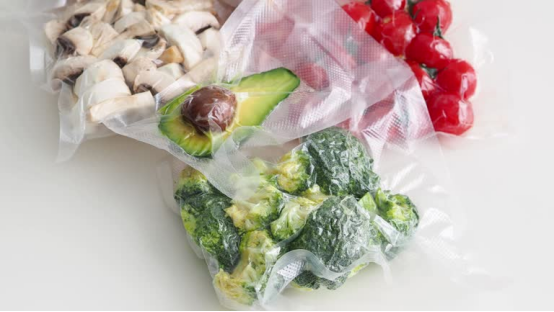
To address these three causes, our vacuum sealer features a dual-chamber design, paired with a 9–13 psi high-suction motor and food-grade vacuum bags, providing air isolation, raw-cooked separation, and oxidation prevention. Meals stay fresh and odor-free for 8–9 days.
Separate Chambers Keep Raw and Cooked Foods Physically Isolated
The sealer has two independent chambers:
Left chamber: For raw foods, wet mode prevents juices from leaking.
Right chamber: For cooked foods, dry mode prevents moisture absorption.
This separation ensures no cross-contamination. For instance, sealing raw chicken in the left chamber and cucumber salad in the right prevents any smell or liquid transfer, even when stored on the same fridge shelf.
A New York mom shared: “With ordinary containers, raw meat would make my baby’s meals smell meaty. After switching to this dual-chamber vacuum sealer, the baby’s food stays fresh, and raw meat juices don’t leak. I no longer need to prep meals every day.”
Adjustable Suction Prevents Oxidation and Odor Transfer
The adjustable motor allows:
Cooked foods (like sautéed vegetables or braised meals): 9 psi low suction prevents crushing.
Raw meats and seafood: 13 psi high suction removes more air.
Tests show air remaining in bags is under 5%, slowing oxidation by eight times compared to standard refrigeration. Braised pork stays fresh for five days without a rancid smell, and scrambled eggs with tomatoes retain their flavor.
The machine supports “one-button vacuum and seal,” making it easy even for beginners. A single press for a 3.5 oz serving of sautéed greens vacuums and seals in 15 seconds—faster and more convenient than manually timed vacuum sealers.
Food-Grade Bags: Leakproof, Heat-Resistant, Safe for Microwaving
Our custom PE+PA thickened vacuum bags are 0.12 mm thick (50% thicker than ordinary bags), heat-resistant from -4°F to 230°F. They are freezer-safe (raw meat can be frozen for 3 months) and microwave-safe (cook directly without removing from the bag).
The bags feature a serrated edge for easy opening, eliminating scissors, and transparent sides for quick meal identification.
3 Practical Meal Prep Tips
Proper usage maximizes flavor preservation, prevents contamination, and extends shelf life.
Select the Right Mode for Each Food Type
Saucy dishes (braised pork, tomato beef stew): Use raw-food wet mode. Extended sealing time prevents liquid loss, so sauces won’t spill during reheating.
Dry dishes (sautéed greens, salads): Use cooked-food dry mode to maintain crispness.
Raw meats and seafood (chicken, shrimp): Use high-suction raw mode to tightly seal and prevent freezer burn.
A San Francisco office worker noted: “Previously, regular vacuum sealing would suck out all the sauce from braised pork. With wet mode, nothing leaks and reheated meals taste freshly made.”
Portion Into Single-Use Bags to Avoid Repeated Thawing
Pack meals in single servings (e.g., 3.5 oz of sautéed vegetables, 7 oz of braised pork). Label with date. Only remove what you need to avoid repeated exposure to air and flavor transfer.
Store by Chamber Type in the Fridge for Easy Access
Store raw foods (meats, seafood) in the lower freezer shelves, and cooked foods on upper fridge shelves. This prevents juices from dripping onto cooked foods and helps locate meals quickly.
Conclusion
Preventing flavor transfer isn’t about wrapping items in multiple layers of plastic—it’s about choosing a tool that isolates air and separates raw from cooked foods. Our dual-chamber vacuum sealer achieves this with independent chambers, 9–13 psi suction, and food-grade leakproof bags. Prep once, and enjoy fresh, odor-free meals for 5–8 days.
If you’re tired of meals picking up other flavors or spoiling, click “View Our Dual-Chamber Vacuum Sealer” to see detailed specs for home and mini models. For meal inspiration, check out “10 Flavor-Safe Meal Prep Recipes for Vacuum Sealing” for beginner-friendly, efficient prepping tips.
FAQ
Are the dual chambers hard to clean?
No. The trays are removable and can be rinsed with water. Light brushing is fine and safer than single-chamber units that require wiping.
Can the vacuum bags be reused?
For clean cooked foods, yes, 2–3 times. For raw meat or oily dishes, use once. The bags are cost-effective—$4–5 per 100 bags.
Is the mini dual-chamber sealer suitable for 1–2 person households?
Yes. At 7 lbs and slightly smaller than an A4 sheet, it saves counter space but still delivers 9 psi suction, perfect for small portions like 3.5 oz of veggies or 7 oz of salad.