
For many home gardeners, summer cucumbers are a treasured part of the harvest. Whether they come from a backyard raised bed or a community garden plot, their crisp texture and clean flavor are hard to replace. But cucumbers are notoriously short-lived. Their thin skin, high moisture content, and sensitivity to temperature swings mean they often soften within days, even inside a refrigerator. That’s where a vacuum sealer becomes an essential part of modern home food storage. By removing air and sealing moisture inside, a vacuum sealer helps cucumbers stay firm and fresh for up to two weeks, making it a practical tool for anyone who preserves small batches of produce or prepares weekly meals.
How Cucumbers Lose Freshness and Why Standard Storage Falls Short
Cucumbers contain nearly 95 percent water, and their fragile skin allows moisture to escape quickly. In a typical American kitchen, leaving cucumbers at room temperature—around 68–77°F—causes noticeable softening within 24 hours. Water escapes through the skin, wrinkles appear, and the crisp bite fades. Even worse, natural oxidation leads to a drop in vitamin content and faster spoilage around the stem.
Refrigeration slows this process, but not by much. The dry airflow inside most refrigerators pulls moisture from cut and whole produce alike. After three to five days, cucumbers stored without protection become soft and lose the refreshing crunch needed for salads and snacks. They can even absorb odors from leftover meals, dairy products, or meat stored nearby.
Plastic wrap helps a little, but it can’t create an oxygen-free environment. Moisture pockets form inside the wrap and encourage bacterial growth, especially around the stem. The result is inconsistent freshness and unpredictable spoilage—problems a vacuum sealer directly solves.
Why a Vacuum Sealer Keeps Cucumbers Fresh for Up to Two Weeks
A vacuum sealer removes nearly all air from a food-safe storage bag, lowering the oxygen level to less than 1 percent. This environment slows bacterial growth, preserves nutrients, and prevents moisture loss. For high-water vegetables like cucumbers, this low-oxygen barrier is especially effective.
Using a vacuum sealer with a refrigerator extends freshness to roughly two weeks. If further preservation is needed, vacuum-sealed cucumbers can be frozen for up to three months. After thawing in the fridge overnight, they retain most of their texture and are ideal for smoothies or chilled soups.
For American households, a vacuum sealer offers two key advantages. First, it’s cost-efficient: basic machines range from $50 to $170, and a pack of 100 food-safe bags costs around $15. Each sealed bag used for cucumbers costs only a few cents. Second, it works well with small harvests. Many community gardeners pick 5–15 lb of cucumbers at a time, and a vacuum sealer handles this amount within minutes.
Step-by-Step Guide: How to Vacuum Seal Cucumbers Properly
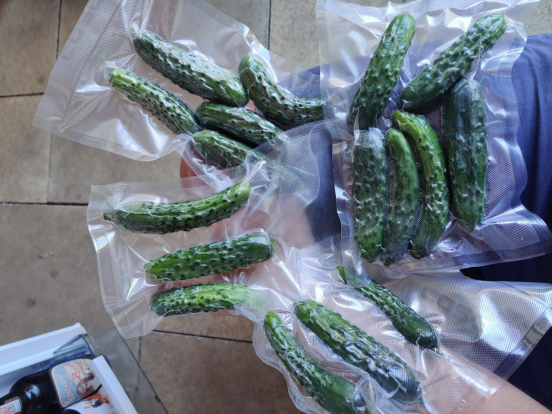
1. Prepare the Cucumbers
To prevent spoilage inside the sealed bag:
Cut off the stem tip by about half an inch—this area spoils the fastest. Rinse the cucumbers under cool tap water, then dry them thoroughly with a clean towel or paper towel. Any surface moisture can interfere with the sealing strip. If the harvest includes cucumbers at different maturity levels, store the firmest ones for longer periods and consume the softer ones sooner.
2. Choose the Right Bags
Select FDA-certified, BPA-free vacuum sealer bags made of nylon and polyethylene, ideally 3–4 mil thick. They work well with most vacuum sealer machines and resist punctures. Standard slicing cucumbers fit in 8×12-inch bags, while longer English cucumbers require 10×14-inch bags. Small pickling cucumbers can be grouped in compact 6×8-inch bags to save space.
3. Seal the Cucumbers
Place the cucumbers inside the bag without touching the sealing edge. Spread them out to prevent pressure damage. If your vacuum sealer includes a Moist Food mode, use it to avoid drawing liquid into the machine. Once sealed, inspect the bag to ensure tight contact around the cucumbers with no trapped air.
4. Store and Use
Refrigerate sealed cucumbers in the crisper drawer, away from apples or bananas, which release ethylene gas that accelerates ripening. When opening a bag, use only what you need and reseal the remaining cucumbers in a fresh bag. Frozen cucumbers should be thawed overnight before use.
Three Common Mistakes to Avoid
Avoid sealing damaged cucumbers. Even small nicks allow bacteria inside. Do not over-vacuum the bag, as excessive pressure can crush delicate Persian or pickling cucumbers. And avoid reusing single-use bags, which may harbor residue or bacteria. If you prefer reusable options, silicone-based bags compatible with most vacuum sealers work well.
Choosing the Right Vacuum Sealer for American Kitchens
For small harvests and limited countertop space, compact models are ideal. For gardeners sealing tomatoes, peppers, or herbs alongside cucumbers, consider units with multiple sealing modes and stronger suction. You can explore reliable, home-friendly models through this curated collection of vacuum sealer options designed for everyday use, available via an optimized CTA such as
Explore our recommended vacuum sealers for preserving fresh produce with long-lasting results.
Two Easy Ways to Enjoy Vacuum-Sealed Cucumbers
Quick pickled cucumbers can be created by slicing thawed or fresh sealed cucumbers and immersing them in a mixture of white vinegar, water, salt, and garlic. Use a jar-sealing attachment to vacuum seal the jar for faster flavor absorption. For a refreshing drink, freeze sliced vacuum-sealed cucumbers and blend them with coconut water, lime juice, and honey—a perfect summer cooler.
Conclusion
A vacuum sealer turns small garden harvests into long-lasting, ready-to-use ingredients. With simple preparation and the right storage bags, cucumbers remain crisp and flavorful for weeks instead of days. For new gardeners and seasoned growers alike, a vacuum sealer ensures every harvest is used to its full potential.