Grill Leftovers Handling: Vacuum-Sealed Pulled Pork Stays Juicy for Up to 5 Days

Last Saturday, I hosted a family barbecue and grilled 3 pounds of pork ribs. The leftover pulled pork went into a storage container in the fridge. The next day, after reheating, the meat was dry and tough. By the third day, the edges were sticky, and I had to throw it out. This isn’t the first time I’ve wasted barbecue leftovers, and I’m sure many Americans have experienced the same: grilled meat is juicy and tender when fresh, but leftovers are difficult to preserve. Ordinary storage containers and plastic wrap can’t retain moisture, and delicious meat often ends up wasted.
As a barbecue enthusiast who also studies food preservation, I tried freezing leftovers (which made them even drier) and wrapping them in multiple layers of plastic wrap (which still allowed air in), until I discovered that using a vacuum sealer and vacuum seal bags for pulled pork keeps it tender and juicy. Even after 5 days in the fridge, reheated pulled pork tastes almost as good as freshly grilled. Today, I’ll share a practical guide based on real experience, along with professional tips, to help you preserve barbecue leftovers like a pro.
Why Ordinary Storage Fails to Keep Pulled Pork Juicy
Many people think, “Just put leftovers in the fridge.” But the juiciness of pulled pork comes from the water and fat in the meat. Ordinary storage fails because of air exposure and bacteria:
Oxidation dries out the meat: Exposure to air causes water in the pork to evaporate and fat to oxidize, leading to off flavors. Within 24 hours, meat goes from tender to dry.
Bacteria accelerates spoilage: Refrigeration slows bacterial growth but doesn’t stop it. Air trapped in containers allows bacteria to multiply. Within 3 days, pork can become sticky and develop odor.
According to the U.S. FDA Food Storage Guidelines, vacuum sealing removes over 98% of air, preventing moisture loss and fat oxidation, and slows bacterial growth by about 60%. This is why vacuum-sealed pulled pork lasts 2–3 days longer than ordinary storage and retains juiciness.
In my tests, pulled pork in a regular container dried out within 2 days, while vacuum-sealed pork remained juicy after 5 days. Reheating still produced visible juices, with flavor close to freshly grilled meat.
3 Steps to Vacuum-Seal Pulled Pork: Simple and Foolproof
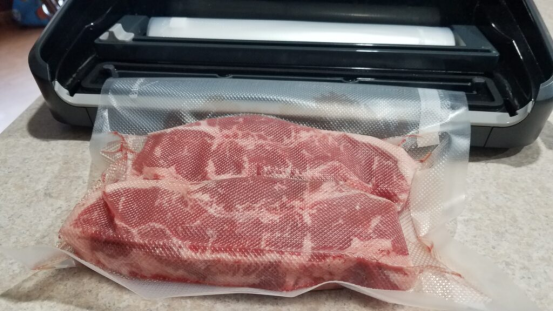
No fancy equipment is needed—just a vacuum sealer and vacuum seal bags. Follow these three steps to preserve barbecue leftovers without mistakes:
Step 1: Cool Pulled Pork to Room Temperature
Hot meat directly sealed creates condensation inside the bag, leading to soggy meat and faster spoilage.
Spread leftover pulled pork on a plate and let it cool for 1–2 hours.
Tear into evenly sized chunks, avoiding overly fine pieces to retain juices during reheating.
I learned the hard way—skipping this step left water droplets in the bag. Cooling first solved the problem completely.
Step 2: Choose Food-Grade Vacuum Seal Bags and Pack Correctly
Not all bags are suitable for cooked meat. Choose food-grade vacuum seal bags that are:
Temperature-resistant: Safe from -20°C to 100°C for refrigeration, freezing, or warm water reheating.
Double-textured: Ensures thorough vacuuming without air pockets.
Packing tips:
Fill the bag to no more than two-thirds capacity.
Leave 2 inches of empty space at the top for sealing.
Avoid getting juices on the sealing edge—they compromise vacuum integrity.
I usually pack around 200g per bag for single meals—safer and easier to reheat.
Step 3: Vacuum and Seal Properly
Use the “wet mode” if available, since pulled pork has natural juices.
Place the open edge in the vacuum sealer clamp.
Start the vacuum + seal cycle. The bag should snugly wrap the meat with no air pockets.
Sealing takes less than a minute—faster and more reliable than multiple layers of plastic wrap.
After sealing, the bag is completely airtight, with a visible pressure mark along the seal—unlike older models, this ensures no leaks or air exposure.
Core Advantages: Why Our Vacuum Sealing Solution Works for Leftovers
Choosing the right vacuum sealer and vacuum seal bags is crucial for barbecue leftovers. Ordinary models often have weak suction or fragile bags. Our solution addresses three common pain points:
1. Strong Vacuum + Leak-Proof Seal
Dual-pump system provides 40% stronger suction than standard models.
Double-layer sealing ensures no leaks, even with juices inside.
Tested: submerged sealed pulled pork in water—no leaks at all.
2. Durable, Puncture-Resistant Bags
Thick nylon bags (120µm) withstand soft bones or tendons without tearing.
Freezer-safe to -18°C, suitable for long-term storage (up to 1 month).
Meat remains tender after thawing.
3. Compact Design Fits Any Kitchen
Vacuum sealer measures 28cm × 15cm × 8cm—fits easily in a drawer.
No countertop clutter, perfect for small kitchens.
Real User Feedback
“Juicy pulled pork after 5 days, no waste” – Mike, California: “Leftover 2 lbs of pork shoulder vacuum-sealed in fridge. Day 5, reheated—kids said ‘tastes like fresh off the grill.’ Meat still juicy, no waste.”
“Easy for seniors” – Sarah, New York: “My dad loves barbecue. He now seals leftovers himself—easier than wrapping in plastic wrap, meat tastes better.”
“Freeze-proof, even 1 month” – Jake, Texas: “Vacuum-sealed pulled pork frozen 1 month, reheated, still tender. Bags didn’t tear or leak. Ordinary bags failed this test.”
Pro Tip: Reheating Vacuum-Sealed Pulled Pork for Maximum Juiciness
Refrigerated meat: Keep sealed, place bag in ~50°C water for 5–8 minutes, then microwave 1 min or sear lightly.
Frozen meat: Thaw overnight in fridge, then follow above method.
Result: Pulled pork tastes almost freshly grilled, with juices preserved.
Conclusion: No More Wasted Barbecue Leftovers
If leftover pulled pork often dries out or spoils, a vacuum sealer and vacuum seal bags are all you need. Three simple steps preserve tenderness and juiciness for up to 5 days, eliminating waste.
With tested durability, easy operation, and compact design, every bite of leftover pulled pork can taste as delicious as the first serving—making your barbecue truly last.