Maximize RV Fridge Space: How Vacuum Sealers Can Revolutionize Cheese Storage

For RV travelers, space is always a premium. Typical RV refrigerators range from 50 to 150 liters—far smaller than standard home fridges—and must store food, drinks, and condiments efficiently. Cheese, a staple for many on the road due to its long shelf life, versatility, and nutritional value, often comes in bulky packaging like plastic boxes or foil wraps. These packages occupy significant fridge space, leaving less room for other essentials. Using a vacuum sealer with vacuum seal bags compresses cheese packaging by over 50% and extends freshness, offering an affordable, high-efficiency solution for RV travelers who want to pack more in limited fridge space while maintaining quality.
The Space Challenge in RV Fridges: 3 Issues with Standard Cheese Packaging
RV fridges’ small capacity and irregular compartments make typical cheese packaging a space killer, presenting three major problems:
- Bulky packaging wastes space
Most cheeses are sold in hard plastic boxes with seals or foil wraps designed for shelf display. A 200-gram cheddar block may occupy 200 cubic centimeters, with over 40% being empty space. In a cramped RV fridge, these voids are unusable, effectively wasting nearly half the available storage. Carrying multiple types of cheese—cheddar, mozzarella, and brie—can consume space that could otherwise store milk or eggs. - Irregular shapes complicate fridge layout
RV fridges often have narrow drawers or layered compartments. Cheese packaging can be square, round, or irregularly shaped, making tight stacking impossible. Circular brie boxes leave gaps, long cheese sticks tip over, and horizontal placement blocks other items. A fridge that could fit 10 food items may only fit 6–7 due to poor layout. - Short shelf life leads to waste
Opened cheese packages expose the product to air, promoting mold and hardness. In an RV, partially consumed cheese often requires extra wrapping, which increases thickness and further wastes space. Shelf life drops from 3–5 days for opened cheese to even less for some soft cheeses. Unopened packages contain air, shortening freshness by 20–30%, which is problematic for long trips.
Vacuum-Sealed Cheese: Double Benefits of Space Saving and Extended Freshness
Using a vacuum sealer is more than compressing packaging—it removes air and ensures tight contact, solving both space and preservation problems, making it ideal for RV fridges.
1. Compresses Volume by 50%+
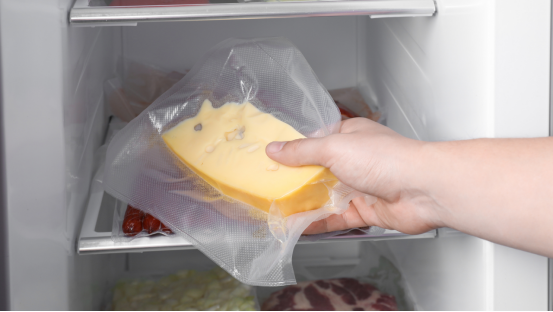
Vacuum-sealed cheese packaging is only 5–10% larger than the cheese itself, eliminating empty space:
- Block cheese: A 200 g cheddar block, originally 200 cm³, shrinks to 110–120 cm³ in a medium-thickness vacuum seal bag. Cutting cheese into 50 g portions and sealing them individually maximizes stacking efficiency, increasing space utilization from 40% to 90%.
- Cheese sticks or shredded cheese: Ten sticks, originally 300 cm³, compress to 180–200 cm³ when vacuum sealed together. Shredded cheese flattens, sticking to fridge walls and freeing middle storage.
- User experience: One frequent RV traveler reported a 30% increase in fridge capacity after vacuum sealing cheese, allowing for longer supply periods and fewer resupply stops.
2. Extends Freshness 2–3 Times
Vacuum sealing isolates cheese from oxygen, slowing bacterial growth:
- Unopened cheese: Hard cheeses like cheddar or gouda last 1–2 months in an RV fridge (4–8°C). Vacuum sealing extends this to 3–4 months. Soft cheeses, like brie or camembert, last 2–3 weeks normally, but 1–1.5 months when vacuum sealed.
- Opened cheese: Once vacuum sealed, shelf life rises from 3–5 days to 10–15 days without affecting texture. Mozzarella maintains its soft, stringy consistency after 10 days, perfect for pizza or pasta.
3. Prevents Cross-Contamination and Enhances Portability
Dense packing in RV fridges can lead to flavor mixing. Vacuum sealing solves this:
- Flavor isolation: Vacuum seal bags prevent cheese aromas from mingling with onions, garlic, or seafood.
- Ease of transport: Pre-portioned sealed bags make outdoor snacks convenient. Bags resist pressure and leaks better than original packaging, maintaining shape and freshness.
RV-Friendly Vacuum Sealer Equipment and Tips
Selecting the right equipment and using it correctly maximizes benefits.
1. Device Selection: Choose Compact, Portable Vacuum Sealers
RV spaces are limited. Full-size machines are impractical. Opt for small handheld or mini desktop models with these features:
- Size and weight: Width ≤20cm, weight ≤1.5kg. Handheld units offer mobility and outdoor use.
- Power and battery: Dual 12V car and home power options are ideal. Battery-only models should seal 10–15 bags per charge.
- Seal strength: Soft cheeses require low strength, and hard cheeses require higher strength to prevent crushing.
- Avoid industrial units: Large machines designed for thick bags are slow, bulky, and unsuitable for RVs.
2. Bag Selection: Match Cheese Type and Fridge Layout
Different cheeses need different vacuum seal bags for effective compression and convenience:
- Block/hard cheese: Medium-thickness (8–10 mil), flat transparent bags sized to cheese dimensions (e.g., 200 g = 15×20 cm).
- Soft cheeses: Thick (12–15 mil), textured bags prevent sticking and protect delicate texture.
- Sticks/shredded cheese: Small standing bags (10×15 cm) pre-portioned for single servings.
Reusable bags reduce plastic waste and lighten RV trash management.
3. Four Practical Vacuum Sealing Tips
- Pre-dry cheese surfaces to ensure proper sealing, especially soft cheese. Flatten blocks 2–3 cm thick for easier stacking.
- Adjust sealing temperature for low-melting cheeses to prevent deformation.
- Leave a 2–3 cm unsealed edge for easy reopening without scissors.
- Organize by usage frequency: frequently used cheeses on top or near the front, less-used items deeper in the fridge.
Extended Value: Beyond Cheese
Vacuum sealers are versatile on the road:
- Other food: Meat compresses 30%+, keeps 1–2 months; vegetables retain crispness and moisture.
- Clothing storage: Seasonal clothes or towels compress 60%+ into under-bed or roof storage.
- Emergency protection: Seal electronics, documents, or batteries against moisture and dust.
Conclusion: Small Sealer, Big Impact
For RV travelers, saving space means improving trip quality. Using a vacuum sealer to process cheese lets your fridge hold more, prevents flavor cross-contamination, and reduces waste—an affordable, practical solution. Explore RV-ready options here: portable vacuum sealers and bags for RV travel, from handheld rechargeable models to mini desktops, and from single-use to reusable bags. Make every inch of your RV fridge count and enjoy hassle-free meals on the road.