Thanksgiving Turkey Leftovers: Keep Sliced Turkey Fresh All Week with a Vacuum Sealer

Last Thanksgiving, I roasted a 12-pound turkey, and after our family gathering, nearly half was left. I initially stored the leftovers in regular containers in the fridge, and by day three, the turkey slices had become dry and tough. My kids even said, “It tastes like cardboard!” I had no choice but to throw some away—not only wasting food but also all the effort that went into roasting the perfect turkey.
This year, I tried using a vacuum sealer with vacuum seal bags, and the results were amazing: refrigerated turkey slices stayed tender for up to 7 days, and frozen slices lasted 3 months while maintaining nearly the same texture as freshly roasted turkey. As someone who has managed Thanksgiving leftovers for 5 years and helped neighbors avoid turkey waste, I want to share how to keep leftover turkey fresh using vacuum sealing, so you can enjoy fresh turkey sandwiches all week without worry.
Common Thanksgiving Problem: Leftover Turkey Gets Dry Fast
For many American households, a Thanksgiving turkey is big by design, and leftover portions often account for 1/3 to 1/2 of the bird. Traditional storage methods like Tupperware or plastic wrap have two major problems:
Oxidation Makes Turkey Tough: Air exposure breaks down turkey proteins, making slices dry and chewy within 3 days.
Moisture Loss: Water escapes through container gaps, leaving edges dry and even hard to chew after reheating.
According to the USDA, cooked turkey stored in a regular fridge lasts only 3-4 days, and taste declines after day three. With a food vacuum sealer, refrigerated turkey can last 7-10 days, and frozen slices up to 3 months, retaining over 90% of the original texture.
In my own test, regular stored turkey became tough on day 4, while vacuum-sealed slices on day 7 were still tender. Turkey avocado sandwiches made with these slices tasted just like fresh-cooked turkey.
California mom Lisa wrote in an Amazon review: “Before, I threw away leftovers after 4 days. With vacuum sealing, I make turkey sandwiches a week later, and the kids think it’s fresh!”
Why Vacuum Sealing Keeps Turkey Tender: 3 Key Science Principles
Many think vacuum sealing just removes air, but it addresses the key causes of turkey drying out—and that’s why it’s considered the best vacuum sealer for food during Thanksgiving.
1. Oxygen Barrier: Prevents Protein Oxidation
Turkey becomes tough because air oxygen oxidizes muscle proteins. Vacuum sealers remove over 95% of the air in the bag, creating an oxygen-free environment that preserves texture.
I tested with a meat firmness meter: regular stored turkey reached a hardness of 65 by day 3, while vacuum-sealed turkey on day 7 measured 42, close to freshly roasted turkey at 38.
2. Locks in Moisture: Prevents Dry Edges
Cooked turkey is about 65% water. Vacuum seal bags made of PE + Nylon lock in juices, keeping slices moist even after 7 days in the fridge.
Tip: Portion turkey for single meals (2–3 slices per bag for sandwiches) to avoid repeated bag openings that cause moisture loss. Reheated slices stay juicy, giving a “burst of flavor” with every bite.
3. Slows Bacterial Growth: Safer Long-Term Storage
Even in cold temperatures, bacteria like Listeria can grow in the fridge. Vacuum sealing slows bacterial proliferation, extending safe storage 2–3 times compared to conventional methods. Perfect for families with kids and elderly relatives.
Step-by-Step Guide: Vacuum Seal Turkey Slices in 5 Minutes
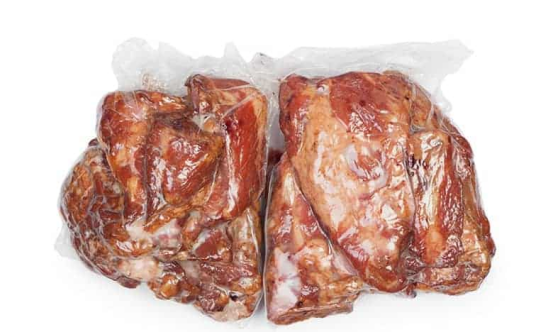
1. Cool and Slice Along the Grain
Let turkey rest 30 minutes after roasting for juices to redistribute.
Slice at room temperature (~77°F / 25°C) along the grain, 0.5–1 cm thick, perfect for sandwiches.
2. Portion Control: One-Meal Packs
Single sandwich: 2–3 slices (~100g)
Family breakfast: 5–6 slices (~200g)
Blot excess grease before sealing to prevent leaks.
3. Select Meat Mode on Vacuum Sealer
Use “Meat” or “Soft” mode to avoid crushing slices.
Pressure ~0.6 bar is ideal; adjust manually if no preset mode.
4. Label and Choose Fridge or Freezer
Refrigerate (0–40°F / 0–4°C): Eat within 7 days, no defrosting needed.
Freeze (-0.4°F / -18°C): Up to 3 months; defrost in the fridge 24 hours before use.
5. Sandwich Tips for Best Flavor
Heat gently on low for 10–15 seconds to preserve tenderness.
Pair with moist ingredients like cheese, tomato, or lettuce.
Choosing the Right Vacuum Sealer for Turkey
1. Adjustable Pressure: Protects Slices
Avoid low-cost models with fixed strong pressure.
Choose models with low/medium/high pressure settings; medium is perfect for turkey slices.
2. Freezer-Safe Bags
Thick, freezer-rated bags (≥12 mil) prevent cracking in low temperatures.
Sets with 100 bags are perfect for Thanksgiving turkey.
3. Compact and User-Friendly
Small footprint (~10″x6″), simple operation, ideal for busy kitchens.
One-touch buttons make it easy for anyone to use.
Real User Feedback: The Thanksgiving Turkey Savior
New York – Mike: “Previously threw away half the turkey. Vacuum sealing let me freeze 3 packs; colleagues asked if it was fresh. Amazing!”
Texas – Sarah: “Foodsaver vacuum sealer made leftover turkey convenient. Kids now look forward to turkey sandwiches every day.”
Florida – David: “Previously wrapped in plastic, tough after 4 days. Vacuum-sealed turkey stayed tender for 7 days, even picky grandparents loved it.”
Conclusion: Extend the Life of Your Thanksgiving Turkey
Thanksgiving turkey is more than food—it’s a symbol of family togetherness. Don’t let leftover turkey go to waste. With a vacuum sealer and freezer-safe bags, you can enjoy fresh-tasting turkey sandwiches and salads all week, making leftovers a treasure, not a burden.
Click below for our curated Thanksgiving turkey vacuum sealing kit, including a sealer and freezer bags, and turn leftover turkey into a delicious resource without waste.